Imagine driving your brand-new car through the city when another vehicle suddenly changes lanes and hits your front bumper. Nobody gets hurt, thankfully, but the repair estimate comes back at several thousand dollars.
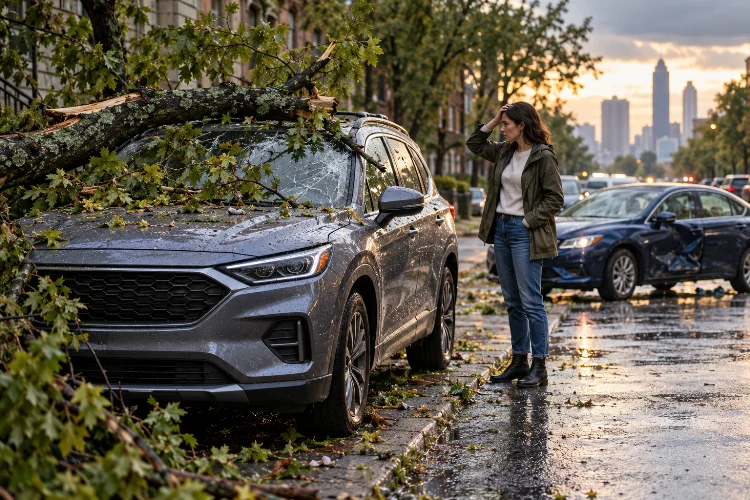
Now imagine a completely different situation. You wake up one morning, walk outside, and discover that a severe storm has dropped a tree branch directly onto your parked vehicle.
Two different accidents, two potentially expensive repair bills, and two types of insurance coverage that could save you from a serious financial headache.
That’s where comprehensive and collision coverage for modern vehicles becomes particularly important.
Today’s cars aren’t exactly simple machines anymore. They’re packed with advanced safety sensors, expensive electronic components, cameras, sophisticated lighting systems, and sometimes enormous electric battery packs.
Even relatively minor damage can turn into a surprisingly expensive repair.
Understanding how these insurance protections work can help you make smarter decisions about your policy, avoid unnecessary expenses, and protect your investment.
Let’s explore what they cover, how much protection you actually need, and when paying for both makes financial sense.
1. Understanding Comprehensive and Collision Coverage
Before deciding which coverage you need, it’s important to understand what each one actually does.
Although comprehensive and collision insurance are frequently purchased together, they protect your vehicle against different types of damage.
What Is Comprehensive Insurance?
Comprehensive insurance covers many unexpected events that aren’t caused by a vehicle collision.
Think of situations where your car gets damaged even though you weren’t necessarily driving it.
For example, imagine leaving your car outside during a thunderstorm. Heavy winds send a tree branch crashing onto your roof, leaving a huge dent and shattered windows.
Comprehensive coverage would generally help pay for the damage, minus your deductible.
Other commonly covered situations include vehicle theft, vandalism, hailstorms, floods, fires, falling objects, and collisions with animals.
According to the National Association of Insurance Commissioners (NAIC), comprehensive insurance protects against several major risks that traditional liability insurance doesn’t address.
However, comprehensive protection isn’t unlimited. Mechanical breakdowns, ordinary deterioration, and routine maintenance generally aren’t covered.
What Is Collision Insurance?
Collision coverage focuses on damage caused when your vehicle crashes into another vehicle or object.
Suppose you’re driving through a parking garage and accidentally hit a concrete pillar. Your bumper, headlights, and front sensors need replacement.
Collision insurance would generally cover eligible repair expenses after your deductible.
It can also apply when your car hits another vehicle, strikes a guardrail, rolls over, or suffers certain types of road-impact damage.
One important advantage is that collision coverage can apply even when you’re responsible for the accident.
Unlike liability insurance, which primarily addresses injuries or property damage you cause to others, collision coverage is designed to protect your own vehicle.
2. Comprehensive vs. Collision Coverage: Key Differences
At first glance, these two insurance products can seem almost identical.
Both protect your vehicle, both commonly involve deductibles, and both may be required by lenders when you’re financing a car.
The real difference lies in what caused the damage.
| Situation | Comprehensive | Collision |
|---|---|---|
| Car stolen from a parking lot | Usually covered | Not covered |
| Vehicle hits another car | Not covered | Usually covered |
| Hail damages the roof | Usually covered | Not covered |
| Car crashes into a fence | Not covered | Usually covered |
| Windshield damaged by flying debris | Usually covered | Not covered |
| Vehicle rolls over | Not covered | Usually covered |
| Driver hits a deer | Usually covered | Generally not covered |
| Flood damages a parked vehicle | Usually covered | Not covered |
Coverage depends on policy language, exclusions, and applicable state law.
Why Having Both Can Make Sense
Consider a driver who owns a $35,000 SUV.
If that driver purchases only collision insurance, the vehicle may be protected against accidents but remain financially exposed to theft, flooding, or severe weather.
On the other hand, comprehensive-only protection generally won’t pay for damage from an at-fault crash.
Combining both creates broader physical-damage protection.
However, neither coverage automatically pays for another person’s injuries, your own medical expenses, or every other expense following an accident.
Those risks may require liability insurance, personal injury protection, medical payments coverage, or other policy options.
3. Why Modern Vehicles Are More Expensive to Repair
One of the biggest reasons to reconsider your auto insurance protection is the increasing complexity of modern vehicles.
Cars now contain technology that would have seemed futuristic just a couple of decades ago.
Unfortunately, sophisticated technology often brings more complicated repair procedures.
Advanced Driver Assistance Systems Increase Repair Costs
Many newer vehicles feature automatic emergency braking, adaptive cruise control, blind-spot monitoring, and lane-keeping assistance.
These features rely on cameras, radar units, ultrasonic sensors, and carefully calibrated electronic systems.
A minor collision can damage components that aren’t immediately visible.
According to a 2023 AAA study, advanced driver assistance systems can account for up to 37.6% of total repair costs in certain crash scenarios.
The research also found that repairing or replacing ADAS components after a minor front-end collision averaged approximately $1,540 across the vehicles studied.
That’s a substantial expense for technology hidden behind ordinary-looking body panels.
Even replacing a windshield may require camera recalibration to ensure safety features operate correctly.
This extra calbration work is one reason modern vehicle repairs can cost much more than expected.
Electric Vehicles Bring Additional Considerations
Electric vehicles introduce another layer of complexity.
Although EVs generally require less routine powertrain maintenance than gasoline-powered vehicles, accident repairs can involve specialized procedures.
High-voltage batteries, electrical isolation systems, advanced thermal management, and manufacturer-specific components may require technicians with specialized training.
The NAIC’s electric vehicle insurance overview identifies vehicle value, repair specialization, battery costs, and parts availability as factors influencing EV insurance pricing.
This doesn’t mean every electric vehicle costs more to repair or insure.
However, drivers should consider whether their insurer has access to qualified repair facilities and appropriate parts.
For expensive EVs, maintaining physical-damage coverage may provide meaningful financial protection.
4. How Deductibles Affect Your Insurance Costs
Choosing comprehensive and collision insurance isn’t simply about deciding whether to purchase both.
You also need to select deductibles that work with your financial situation.
A deductible is the amount you’re responsible for paying toward a covered claim before your insurer contributes.
Lower Deductibles vs. Higher Deductibles
Imagine your vehicle suffers $4,000 in covered collision damage.
With a $500 deductible, your insurer would generally pay $3,500.
With a $1,000 deductible, the insurer would generally pay $3,000.
The difference is straightforward, but the premium implications are important.
Higher deductibles generally reduce insurance premiums because you’re agreeing to take responsibility for more of the potential loss.
Lower deductibles usually mean paying more for coverage in exchange for lower out-of-pocket costs after a claim.
The NAIC’s guide to comparing insurance quotes recommends evaluating deductible affordability rather than choosing based on premiums alone.
A Practical Deductible Example
Let’s say an insurer offers two hypothetical collision coverage options.
One has a $500 deductible and costs $600 annually. Another has a $1,000 deductible and costs $450 annually.
Choosing the higher deductible saves $150 each year.
However, you would pay an additional $500 if a covered claim required the full deductible.
It would take approximately three years and four months of $150 annual savings to offset that additional $500 exposure, assuming premiums remain unchanged.
That doesn’t mean one option is automatically better.
The right choice depends on your emergency savings, driving habits, financial stability, and comfort with unexpected expenses.
You can also choose different deductibles for comprehensive and collision coverage if your insurer permits it.
5. Evaluating Coverage Based on Your Vehicle’s Value
Not every vehicle needs the same level of insurance protection.
A new luxury SUV and a 15-year-old compact sedan have dramatically different replacement values.
That’s why vehicle age and market value should play major roles in your decision.
New and High-Value Vehicles
For relatively new cars, comprehensive and collision coverage often makes sense.
Imagine purchasing a $45,000 vehicle and dropping physical-damage coverage to save a few hundred dollars annually.
If the car is subsequently stolen or seriously damaged in an at-fault accident, you could face a loss worth tens of thousands of dollars.
That’s a significant financial risk.
Newer luxury vehicles can be particularly expensive to repair because of specialized body panels, premium lighting systems, and advanced electronics.
If replacing your vehicle would seriously disrupt your finances, maintaining both coverages is usually worth considering.
Older Vehicles and Depreciation
The situation becomes more complicated as a vehicle loses value.
Suppose your car is currently worth $5,000, and comprehensive plus collision insurance costs $900 annually.
You’re paying an amount equivalent to 18% of the vehicle’s estimated value each year for those two protections.
That doesn’t automatically make the coverage unnecessary, but it deserves a closer look.
Insurance companies generally base total-loss settlements on a vehicle’s actual cash value immediately before the covered loss, subject to the policy terms and applicable rules.
If your vehicle is worth $5,000 and carries a $1,000 collision deductible, a simplified total-loss example might result in a $4,000 insurance payment.
For some drivers, maintaining that protection provides valuable peace of mind.
Others with sufficient savings may decide to self-insure the risk once their vehicle becomes older and less valuable.
The important question isn’t simply how old your car is. It’s whether you could comfortably afford to replace it without insurance assistance.
6. Special Considerations for Electric, Hybrid, and Luxury Cars
Different vehicle technologies create different financial risks.
Evaluating insurance properly means looking beyond the vehicle’s purchase price.
Battery Protection and Electric Vehicles
One common question among electric vehicle owners involves battery coverage.
If a collision damages a high-voltage battery, collision coverage may apply when the damage results from an insured event.
Similarly, comprehensive protection may respond to certain covered events involving fire, flooding, or other non-collision damage.
However, normal battery degradation, manufacturing defects, and mechanical failures generally aren’t covered by standard physical-damage insurance.
Those issues may fall under a manufacturer’s warranty or another protection program.
EV owners should review their policy carefully and ask whether special repair procedures and manufacturer requirements are addressed.
Luxury Vehicles and Specialized Components
Luxury cars often feature expensive cameras, adaptive headlights, aluminum body structures, and sophisticated electronic systems.
A damaged headlight assembly can cost significantly more to replace than a conventional halogen unit.
Some vehicles also require specialized repair equipment or manufacturer-approved procedures.
Before buying coverage, ask whether the policy pays for original equipment manufacturer parts, aftermarket alternatives, or a combination of both.
Also clarify whether sensor recalibration and diagnostic procedures are covered when they are neccessary parts of a covered repair.
Modified Vehicles and Additional Equipment
Vehicle modifications deserve special attention.
Aftermarket wheels, premium audio equipment, custom paint, and performance upgrades may not receive their full replacement value under a standard policy.
Some insurers offer custom parts and equipment coverage.
If you’ve invested heavily in modifications, document those changes and confirm the protection available before an accident occurs.
7. Common Coverage Gaps Drivers Often Overlook
Comprehensive and collision insurance provide valuable protection, but they’re not designed to handle every financial consequence of vehicle damage.
Understanding the limitations can prevent unpleasant surprises during a claim.
Actual Cash Value vs. Replacement Cost
A common misunderstanding involves how much an insurer pays when a vehicle is declared a total loss.
Traditional auto policies commonly use actual cash value rather than the original purchase price.
Imagine purchasing a new vehicle for $40,000.
Two years later, its current market value has fallen to $29,000, but you still owe $33,000 on your auto loan.
If the vehicle is totaled, a standard insurance settlement may be based on that $29,000 value, minus any applicable deductible.
That could leave you owing thousands of dollars to the lender.
When GAP Insurance Becomes Useful
Guaranteed Asset Protection, commonly called GAP insurance, is designed to address certain differences between your outstanding loan balance and the insurance settlement after a covered total loss.
According to the Consumer Financial Protection Bureau, GAP products may help protect borrowers who owe more than their vehicle is worth.
However, coverage limits, exclusions, deductible treatment, and eligibility conditions vary.
Drivers with small down payments, long financing terms, or rapidly depreciating vehicles may find GAP protection worth evaluating.
Rental Cars and Other Expenses
Another overlooked issue is transportation after an accident.
Your collision coverage might pay for an eligible repair, but that doesn’t automatically mean the insurer will pay for a rental vehicle while yours is in the shop.
Rental reimbursement is often a seperate optional coverage.
The same applies to towing, roadside assistance, and some additional expenses.
If you rely on your vehicle for commuting or family responsibilities, these extras may be useful.
Also remember that using a personal vehicle for ridesharing or delivery work can change coverage eligibility. Always disclose commercial or app-based driving activities to your insurer.
8. How to Reduce Premiums Without Sacrificing Important Protection
Insurance optimization isn’t about purchasing the cheapest possible policy.
It’s about finding a balance between affordable premiums and meaningful financial protection.
Fortunately, several practical strategies can help.
Compare Policies Using Identical Coverage Levels
Start by requesting quotes from multiple insurers.
Make sure every quote uses the same liability limits, physical-damage coverage, deductibles, driver information, and optional benefits.
Otherwise, a lower-priced quote might simply contain less protection.
Compare the overall policy, not just the monthly payment.
Explore Discounts and Usage-Based Programs
Many insurance companies offer potential savings for qualifying drivers.
Depending on the insurer and jurisdiction, discounts may be available for bundling policies, maintaining a favorable driving record, installing approved anti-theft technology, or choosing electronic billing.
Some companies also offer usage-based insurance programs that consider driving behavior or mileage.
These options can help certain drivers save money, although telematics programs may involve privacy considerations and different pricing outcomes.
Evaluate Theft and Weather Exposure
Where you live and park your vehicle affects your risk.
Drivers in flood-prone areas may place greater value on comprehensive protection, while drivers who frequently commute in heavy traffic may be especially concerned about collision damage.
Vehicle theft also remains an important consideration.
The National Insurance Crime Bureau reported that 659,880 vehicles were stolen in the United States during 2025, despite a significant decline from 2024.
That illustrates why theft coverage still matters, even as nationwide trends improve.
Risk levels vary considerably by neighborhood, vehicle model, and parking arrangement.
Review Your Policy Every Year
Your vehicle’s value, driving habits, and financial circumstances can change substantially over time.
A deductible that made sense three years ago might no longer be your best option.
Similarly, a vehicle that once justified expensive physical-damage coverage may now be worth considerably less.
Review your insurance at renewal and after important changes such as paying off a loan, moving, or significantly reducing your annual mileage.
Before removing any coverage, confirm that your lender or leasing company doesn’t require it.
This simple habit can help prevent overpaying while keeping your protection aligned with your current needs.
9. Making the Final Decision: Is Both Coverage Worth It?
The smartest insurance decision comes down to understanding the financial risk you’re willing to carry.
Rather than automatically purchasing every available option, evaluate what would happen if your car were severely damaged or stolen tomorrow.
Could you afford to repair it? Could you replace it without borrowing money? Would losing access to your vehicle create financial problems?
Your answers should guide your coverage decisions.
For newer, financed, electric, and expensive vehicles, carrying both comprehensive and collision insurance is often a sensible approach.
For older vehicles with relatively low market values, comparing annual premiums against potential claim payouts becomes increasingly important.
Remember that coverage decisions are rarely permanent.
You can adjust deductibles, reconsider optional benefits, and request updated quotes as your financial situation changes.
The goal is to make insurance work for your circumstances rather than simply accepting the first policy you’re offered.
Choosing comprehensive and collision coverage for modern vehicles requires more than comparing monthly premiums.
Today’s cars contain sophisticated electronics, advanced safety systems, and expensive components that can turn minor incidents into major repair bills.
Comprehensive insurance helps protect against risks such as theft, severe weather, and vandalism, while collision coverage addresses many accident-related damages.
The right combination depends on your vehicle’s value, financing arrangements, repair costs, deductible preferences, and financial flexibility.
Most importantly, don’t assume that more expensive insurance automatically means better protection.
Take action today: Review your current policy, estimate your vehicle’s market value, compare several quotes, and identify any unnecessary costs or coverage gaps.
A little research now could save you a substantial amount of money when something unexpected happens.