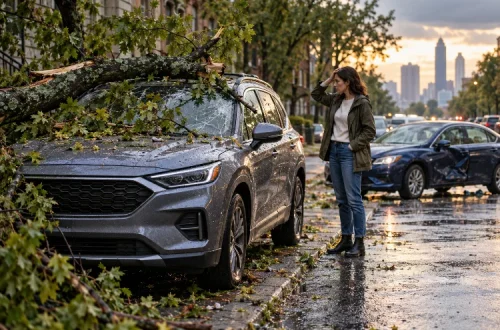
Imagine spending $180,000 on your dream luxury car, carefully maintaining it, and keeping it in perfect condition. Then, one unfortunate afternoon, another driver causes a serious accident that leaves your vehicle beyond repair.
You contact your insurance company expecting the full value of your investment to be protected.
But there’s a problem.
Your policy has coverage limitations you never fully understood, and the settlement offer is significantly lower than what you expected.
Pretty frustrating, right?
This situation highlights why advanced policy limit strategies for high-value vehicle protection are incredibly important for owners of luxury, exotic, performance, and collectible automobiles.
Unlike ordinary vehicles, expensive cars often involve specialized repair costs, unusual depreciation patterns, limited replacement availability, and potentially substantial financial exposure.
Simply purchasing comprehensive coverage isn’t always enough.
You also need to understand how insurance limits, valuation methods, liability protection, and policy exclusions work together.
The good news is that a carefully structured insurance policy can reduce financial uncertainty without requiring you to purchase every optional coverage available.
Let’s explore how to build smarter, more effective protection for a vehicle that’s anything but ordinary.
Note: This article focuses primarily on U.S. auto insurance practices. Coverage options, terminology, and legal requirements vary by insurer and jurisdiction.
1. Understand Why High-Value Vehicles Need Specialized Policy Limits
Owning an expensive vehicle creates insurance considerations that don’t always apply to an everyday commuter car.
A premium sports car, luxury SUV, limited-production automobile, or restored classic may cost significantly more to repair or replace than a conventional vehicle.
Even seemingly minor accidents can create complicated claims.
Why Standard Auto Insurance Limits May Fall Short
Traditional insurance policies are generally designed around common vehicle risks and standard valuation methods.
They can work perfectly well for ordinary vehicles, but specialized automobiles introduce additional considerations.
For example, imagine two vehicles experiencing similar front-end collision damage.
Repairing a conventional sedan might involve commonly available components and standard labor rates.
A high-performance sports car, however, may require specialized body panels, expensive sensors, manufacturer-approved equipment, and technicians with specific training.
The repair bill can be considerably higher.
According to the National Association of Insurance Commissioners, auto insurance coverage operates within the limits, conditions, and risks established by the insurance contract.
That makes understanding your policy just as important as choosing the coverage itself.
Identify Your Most Significant Financial Risks
Before changing insurance limits, consider what could create the largest financial loss.
For some owners, the biggest concern is a total loss involving an expensive vehicle.
Others face substantial liability exposure because they have considerable personal assets or regularly drive in congested areas.
Collectors may worry about increasing market values, while owners of modified vehicles might be concerned about replacement parts and restoration expenses.
These situations require different insurance solutions.
The goal isn’t simply buying higher limits everywhere. It’s identifying the financial risks that deserve stronger protection.
Once you understand those risks, choosing appropriate policy limits becomes much easier.
2. Choose the Right Vehicle Valuation Strategy
One of the most important decisions in luxury car insurance involves determining how much the insurer will pay if your vehicle is declared a total loss.
This is especially relevant when your automobile has unusual market characteristics or a value that standard pricing guides don’t adequately reflect.
Actual Cash Value vs. Agreed Value Coverage
Most standard auto policies calculate total-loss settlements using actual cash value, commonly known as ACV.
This generally reflects the vehicle’s value immediately before the covered loss, accounting for factors such as condition, mileage, depreciation, and the relevant market.
For example, suppose you originally purchased a luxury vehicle for $160,000.
Three years later, its actual cash value might be $112,000.
If the vehicle is totaled, a standard policy may calculate compensation around that lower value, subject to the policy’s terms and deductible.
That doesn’t necessarily mean the insurer is making an unfair decision. It means the policy uses a particular settlement method.
Agreed value insurance works differently.
You and the insurance company establish an insured value in advance, typically supported by vehicle records, photographs, appraisals, or market information.
Under an agreed value policy, a covered total loss generally pays the agreed amount, subject to the contract’s provisions.
As Hagerty explains, agreed value coverage can be particularly useful for collectible vehicles whose values don’t follow typical depreciation patterns.
Don’t Confuse Stated Value With Agreed Value
Here’s where things become interesting.
Some insurance policies offer stated value coverage, which sounds almost identical to agreed value.
However, the two aren’t necessarily the same.
With certain stated amount policies, the insurer may pay the lesser of the declared amount or the vehicle’s actual cash value, according to the contract.
Imagine declaring a vehicle’s value at $200,000, only to discover that the policy allows a settlement based on a substantially lower market valuation.
That’s an expensive misunderstanding.
Before purchasing specialized insurance, ask your provider to explain the exact total-loss settlement provisions.
A clearly documented agreed value arrangement can offer greater predictability when properly matched to the automobile’s value.
Update Your Valuation as the Market Changes
High-value automobiles don’t always depreciate in predictable ways.
Some limited-production models appreciate because of rarity, historical significance, or increasing collector demand.
A vehicle insured for $140,000 several years ago might now be worth considerably more.
If its agreed value remains unchanged, the insured amount could fall below its current market value.
Reviewing valuations regularly helps prevent this situation.
Professional appraisals, recent comparable sales, restoration documentation, and specialist market reports can support updated insurance values.
3. Increase Liability Limits to Protect More Than Your Vehicle
Many luxury vehicle owners focus heavily on protecting the automobile itself.
That’s understandable, but overlooking liability insurance can create an even bigger financial problem.
Your car might be worth $200,000, while the financial consequences of a serious accident could be much greater.
Understand Split Liability Limits
In many U.S. states, automobile liability insurance uses three separate coverage limits.
A policy displaying 250/500/100 generally means:
- $250,000 in bodily injury liability coverage per person.
- $500,000 in bodily injury liability coverage per accident.
- $100,000 in property damage liability coverage per accident.
These figures are examples rather than universal recommendations.
Suppose an accident damages several expensive vehicles and causes substantial injuries.
Even a policy with relatively high limits could be exhausted if the total covered damages exceed those amounts.
According to the California Department of Insurance, drivers can become personally responsible for damages exceeding their purchased liability limits.
That’s why liability protection should reflect your broader financial situation, not simply the market value of your own car.
Consider Combined Single-Limit Coverage
Some insurers offer combined single-limit liability insurance, commonly abbreviated as CSL.
Instead of dividing liability coverage into separate bodily injury and property damage limits, CSL provides one overall limit for covered claims arising from an accident.
For example, a $500,000 combined single limit may provide more flexibility in allocating available coverage among covered injury and property damage claims.
This can be beneficial when an accident produces an unusual combination of expenses.
However, CSL isn’t automatically better for every driver.
Compare the total available protection, pricing, exclusions, and policy terms before choosing between coverage structures.
Add Personal Umbrella Insurance
For drivers with substantial financial assets, personal umbrella insurance can provide another layer of protection.
An umbrella policy generally offers additional liability coverage above qualifying underlying insurance policies.
Imagine causing an accident that results in $900,000 in covered damages.
Your underlying auto liability policy provides $500,000, leaving an additional $400,000 in potential exposure.
If you have a qualifying umbrella policy with sufficient available coverage, it may help address that remaining amount.
The NAIC’s umbrella insurance guidance explains that umbrella policies can provide additional liability protection and certain legal defense benefits.
Keep in mind that umbrella coverage doesn’t automatically cover every situation.
Insurers commonly require specified underlying insurance limits, and certain activities or claims may be excluded.
4. Optimize Collision, Comprehensive, and Repair Coverage Limits
Protecting an expensive automobile requires more than choosing a high total-loss valuation.
You also need coverage that responds effectively when the vehicle is damaged but can still be repaired.
That distinction matters because repair costs can be surprisingly complicated.
Why Specialized Repair Coverage Matters
Luxury and exotic automobiles frequently contain proprietary components, sophisticated electronics, and advanced driver-assistance systems.
A collision that appears relatively minor could require replacement parts, sensor calibration, specialist paintwork, and extensive labor.
Not every repair facility has the neccessary equipment or expertise.
For that reason, high-value vehicle owners should examine the repair provisions within their policies.
Some specialized insurers provide benefits involving original equipment manufacturer parts and qualified repair facilities.
For example, Chubb’s collector car insurance information describes access to specialized repairs and OEM or fabricated replacement parts under its applicable coverage.
However, those benefits shouldn’t be assumed to exist in every premium policy.
Ask whether your coverage includes manufacturer-approved repair procedures, your preferred repair facility, and appropriate replacement components.
Evaluate Comprehensive Protection Carefully
Comprehensive coverage generally protects against specified non-collision incidents.
Examples commonly include theft, vandalism, hail, fire, flooding, and falling objects.
If you own an expensive vehicle, these risks can be financially significant even when you rarely drive.
A garage fire could destroy an entire vehicle collection, while severe weather might damage several cars simultaneously.
Review whether each vehicle has appropriate physical damage protection and whether any special restrictions apply.
Don’t assume that a single policy limit automatically provides adequate coverage for every car, accessory, or stored component.
Choose Deductibles Based on Financial Capacity
Higher deductibles often reduce insurance premiums.
However, choosing a deductible should involve more than finding the lowest possible monthly payment.
Suppose your insurer offers a $1,000 deductible and a $2,500 deductible.
The higher option might save several hundred dollars annually, depending on the insurer and vehicle.
If you can comfortably afford the additional out-of-pocket expense, that arrangement could make sense.
But if an unexpected repair would disrupt your finances, the lower deductible may provide better peace of mind.
A sensible approach is to select the highest deductible you can comfortably absorb without creating financial pressure.
5. Close Coverage Gaps With Additional Insurance Protection
Even a policy with excellent liability and physical damage limits can leave certain financial risks uncovered.
These gaps aren’t always obvious until an accident happens.
Understanding optional protection is therefore an important part of a more advanced insurance strategy.
Match Uninsured Motorist Limits to Your Risk
Uninsured motorist coverage helps protect against certain losses caused by drivers without applicable liability insurance.
Underinsured motorist protection addresses situations where the responsible driver’s available insurance isn’t sufficient.
Imagine suffering serious injuries in a collision caused by someone carrying only limited insurance.
Your medical expenses, lost income, and other eligible damages might significantly exceed that driver’s available liability coverage.
Appropriate UM/UIM protection can help reduce the shortfall, depending on the policy and state regulations.
For drivers seeking substantial financial security, comparing higher UM/UIM limits with existing bodily injury liability limits is worth considering.
Remember that uninsured motorist bodily injury coverage is different from insurance that repairs your own vehicle.
Property damage protections and deductible requirements vary by jurisdiction.
Consider GAP Insurance for Financed Luxury Cars
Guaranteed Asset Protection, commonly called GAP insurance, addresses another potential problem.
Luxury vehicles can experience substantial depreciation, particularly during the early years of ownership.
Suppose you owe $105,000 on an auto loan, but your vehicle’s covered total-loss settlement is only $88,000.
You could face a potential $17,000 difference between the loan balance and insurance compensation.
GAP coverage may help with some or all of this shortfall, subject to its terms.
The Consumer Financial Protection Bureau explains that GAP products are generally optional and can vary in price and eligibility.
Not every expensive car needs GAP insurance.
It becomes most relevant when your outstanding financing balance exceeds the amount that your primary auto policy would pay after a total loss.
Also, GAP isn’t a substitute for adequate liability insurance or comprehensive and collision protection.
Think About Replacement Transportation
If your luxury vehicle requires specialized repairs, you might be without it for an extended period.
Rental reimbursement coverage can reduce temporary transportation expenses after a qualifying claim.
However, many policies contain daily payment limits and maximum benefit periods.
Those limits may not support the type of replacement vehicle you normally require.
Compare the available transportation benefits with your actual needs rather than assuming all rental coverage is equivalent.
6. Protect Modifications, Collections, and Special Vehicle Uses
High-value vehicle insurance becomes more complicated when the automobile isn’t completely standard.
Custom upgrades, rare components, multiple vehicles, and unusual driving activities can introduce risks that conventional insurance policies don’t always address.
Document Custom Modifications and Expensive Upgrades
Imagine purchasing a performance vehicle and investing another $35,000 in aftermarket components.
You install upgraded suspension, custom wheels, premium interior materials, and specialized performance equipment.
Those improvements might increase the cost of repairing or replacing the car.
However, they don’t automatically increase the amount your insurer agrees to pay.
Some policies limit coverage for custom equipment unless additional protection is purchased or the components are specifically declared.
Keep detailed invoices, photographs, and installation records.
If your vehicle has been substantially modified, ask whether those changes need underwriting approval.
A written confirmation is much more useful than assuming your insurer already understands the vehicle’s configuration.
Insure Multiple High-Value Vehicles Properly
Owning several collector cars creates another challenge.
Each automobile may have a different value, driving pattern, storage arrangement, and insurance requirement.
One car might be regularly driven on weekends, while another remains in climate-controlled storage and rarely leaves the property.
Treating both vehicles identically may be inefficient.
Specialist insurance providers sometimes offer policies designed for collections, including additional protection for restoration projects and spare parts.
The Insurance Information Institute highlights the importance of appropriate valuation, specialist repairs, and coverage for unique replacement components.
Make sure every vehicle is documented correctly.
Also verify the policy’s treatment of newly acquired vehicles, temporary storage locations, shared garages, and transportation between facilities.
Review Track Days and Special Events
Performance vehicles are often purchased for experiences that ordinary cars simply can’t provide.
Track days, driving schools, timed events, and motorsport activities may be part of the ownership experience.
However, standard personal auto insurance frequently contains restrictions or exclusions relating to certain track activities and competitive events.
Never assume that an event is covered merely because it isn’t a formal race.
If you regularly participate in high-performance driving activities, investigate dedicated track-day or motorsport insurance.
Confirm exactly when coverage begins and ends, what activities qualify, and how deductibles or damage limits apply.
Specialized transport insurance may also be worth investigating if your vehicle is shipped frequently.
7. Review and Adjust Policy Limits as Your Financial Situation Changes
An advanced insurance strategy shouldn’t remain unchanged for years.
Vehicle values fluctuate, repair costs evolve, and personal financial circumstances can change significantly.
A policy that was appropriate three years ago might no longer offer the protection you need.
Schedule an Annual Coverage Review
Set aside time before each renewal to review your existing policy.
Start by checking the current market value of your vehicle and comparing it with the applicable insured value or valuation arrangement.
Next, examine liability limits, deductibles, optional coverages, and exclusions.
If you’ve purchased another expensive automobile, completed a major restoration, or increased your financial assets, additional adjustments may be appropriate.
Owners of appreciating collector vehicles should pay particular attention to agreed value amounts.
Waiting until after a loss to discover that your insured value is outdated is rarely a pleasant experience.
Compare Specialized Insurance Providers
Standard insurers can offer excellent protection, but some high-value vehicles benefit from specialist underwriting.
Specialty providers may have experience with rare automobiles, unusual replacement components, complex valuations, and sophisticated repair requirements.
When comparing policies, focus on more than premium prices.
A slightly cheaper policy isn’t necessarily better if it imposes restrictive repair provisions or uses a less favorable total-loss settlement method.
Request comparable quotes with the same liability limits, vehicle valuations, deductibles, drivers, and intended uses.
This makes differences in policy quality easier to identify.
Evaluate Premium Savings Without Weakening Protection
Saving money is still important, even when you’re insuring an expensive car.
Bundling eligible policies, maintaining a strong driving record, improving vehicle security, or using approved storage facilities may affect premiums.
Limited-use collector policies can sometimes be less expensive than policies designed for everyday driving because the exposure is different.
However, these policies may include usage or eligibility restrictions.
Never describe a daily-use vehicle as an occasional collector car simply to obtain lower premiums.
Accurate disclosures matter when underwriting a policy and evaluating claims.
Practical tip: Ask your insurer to provide several quotes showing different deductible and liability-limit combinations. Comparing the additional cost of protection can reveal which changes deliver meaningful value.
Build a Personal Insurance Review Checklist
A useful review should answer several straightforward questions.
Is the vehicle insured using an appropriate settlement method? Does the policy recognize important modifications, special equipment, and restoration work?
Are the liability limits sufficient for your financial exposure?
Would you understand the deductible, exclusions, and claims process if a serious loss happened tomorrow?
If any answer is unclear, contact your insurance agent or broker for clarification.
The strongest insurance strategy is one you can actually understand and confidently rely on.
Protecting a luxury, exotic, or collectible automobile requires more than purchasing an expensive insurance policy.
It requires choosing appropriate coverage limits, understanding vehicle valuation methods, and preparing for the financial risks that matter most.
Agreed value arrangements, stronger liability protection, umbrella insurance, specialized repair benefits, and carefully selected additional coverage can all play valuable roles.
At the same time, reviewing deductibles, updating vehicle valuations, and comparing specialist insurers can help prevent unnecessary spending.
Remember, no policy eliminates every risk, and coverage always depends on its specific conditions.
Ready to strengthen your high-value vehicle protection? Review your current insurance documents, identify potential financial gaps, and request tailored quotes from reputable providers.
A little extra planning today could protect a substantial investment tomorrow.