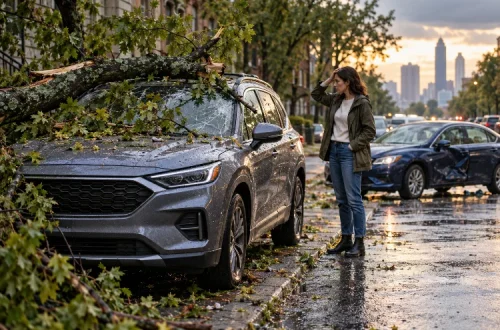
Imagine driving home after a long day when another vehicle suddenly cuts across your lane. You hit the brakes, but there’s not enough time to avoid a collision.
Fortunately, everyone walks away safely. Unfortunately, the financial situation isn’t nearly as simple.
Your car needs expensive repairs, another driver files a claim, and your insurance company starts explaining coverage limits you barely remember choosing.
Sounds stressful, right?
That’s exactly why understanding advanced car insurance coverage strategies for maximum protection matters more than simply finding the cheapest monthly premium.
Many drivers purchase insurance because it’s legally required. They select a policy, make their payments, and assume they’re protected against practically anything that happens on the road.
But insurance doesn’t work quite that way.
Different coverage types protect against different financial risks, and the limits, deductibles, exclusions, and optional benefits can dramatically affect how much money you personally lose after an accident.
The good news? You don’t need to become an insurance expert to make smarter decisions.
With the right approach, you can build stronger financial protection while keeping your premiums within a reasonable budget.
Note: This guide primarily uses U.S. auto insurance terminology. Coverage availability, legal requirements, and policy conditions vary by state, country, and insurer.
1. Understanding the Foundation of Comprehensive Car Insurance Protection
Before exploring advanced strategies, it’s important to understand what your insurance policy actually protects.
One of the biggest mistakes drivers make is assuming that purchasing basic insurance automatically provides complete financial security.
In reality, most policies combine several seperate types of protection, each designed to address a particular risk.
Understanding the Main Types of Auto Insurance Coverage
Liability insurance generally pays for injuries or property damage you cause to other people when you’re legally responsible for an accident.
Collision coverage helps repair or replace your own vehicle after a covered collision, while comprehensive insurance protects against certain non-collision events.
These events commonly include theft, vandalism, fire, hail, flooding, and damage caused by falling objects.
Meanwhile, uninsured and underinsured motorist protection can help when another driver causes an accident but lacks sufficient insurance.
According to the National Association of Insurance Commissioners (NAIC), the protection available depends on the coverage types selected and applicable legal requirements.
Why Minimum Coverage Isn’t Always Enough
Legal minimum requirements establish the basic amount of insurance needed to drive, but they don’t necessarily provide adequate financial protection.
Imagine causing an accident involving several vehicles, significant property damage, and multiple injured passengers.
If your liability limits are exhausted, you could potentially become personally responsible for additional damages.
That’s why experienced insurance shoppers evaluate their actual financial exposure rather than relying exclusively on legal minimums.
Your savings, income, vehicle value, outstanding loans, and driving habits should all influence your insurance decisions.
A strong policy isn’t necessarily the one with the greatest number of optional benefits. It’s the one that addresses your most serious financial risks without unnecessary spending.
2. Optimize Liability Coverage Limits for Serious Financial Protection
Liability coverage deserves special attention because a major accident can create expenses far beyond the cost of repairing a vehicle.
Medical treatment, rehabilitation, lost income, property damage, and legal expenses can quickly turn an ordinary traffic accident into a major financial problem.
How Bodily Injury and Property Damage Limits Work
In many U.S. policies, liability limits are displayed using three numbers, such as 100/300/100.
This example generally represents:
- $100,000 in bodily injury coverage per person.
- $300,000 in total bodily injury coverage per accident.
- $100,000 in property damage liability per accident.
These are illustrative limits, not a universal recommendation or a guarantee of sufficient protection.
For instance, imagine causing an accident in which two people suffer injuries requiring extensive medical treatment.
Even if your policy provides substantial total accident coverage, the per-person limit can still restrict the amount available for an individual claim.
Understanding both limits is essential.
Choose Liability Limits Based on Financial Exposure
An effective strategy involves comparing potential accident costs with your current assets and future earning potential.
Someone with significant savings, property ownership, or substantial income may have more to protect from an uncovered liability judgment.
However, drivers without major assets shouldn’t automatically assume minimum coverage is sufficient.
Future earnings can also be exposed to certain legal judgments, depending on applicable law.
Consider requesting quotes for multiple liability-limit levels, such as 100/300 and 250/500, where available.
You may discover that increasing your protection costs considerably less than expected.
Some insurers also offer combined single-limit liability coverage, which provides one overall limit rather than separate bodily injury and property damage limits.
The best structure depends on your circumstances, available products, and insurer.
Practical insight: Before lowering liability limits to save money, ask how much your annual premium would actually decrease. A relatively small saving may not justify a substantial reduction in protection.
3. Build a Smarter Collision and Comprehensive Insurance Strategy
Collision and comprehensive insurance are frequently discussed together, but they protect against different situations.
Understanding that distinction helps you avoid both unnecessary coverage and expensive gaps.
When Collision Coverage Makes Financial Sense
Collision protection helps pay for damage to your vehicle following covered accidents involving another vehicle or object.
It can also apply to certain single-vehicle accidents, such as striking a barrier or overturning.
This coverage becomes particularly valuable when your vehicle is expensive to repair or replace.
If you’re financing or leasing a car, your lender will typically require collision and comprehensive coverage.
However, drivers with older, fully paid-off vehicles have more flexibility.
Suppose your car has a current market value of $4,500, and collision coverage costs $750 annually with a $1,000 deductible.
The maximum benefit available after a total loss may be relatively limited compared with the ongoing premiums.
In that situation, you should evaluate whether maintaining collision coverage remains financially worthwhile.
That doesn’t automatically mean canceling it. Your emergency savings and ability to replace the vehicle are equally important.
Comprehensive Protection Against Unexpected Events
Comprehensive insurance addresses risks that aren’t necessarily connected to your driving ability.
A perfectly careful driver can still experience vehicle theft, a falling tree, or severe weather damage.
If you live somewhere with frequent storms, flooding, wildfire exposure, or vehicle theft, comprehensive coverage deserves careful consideration.
Some policies offer specialized glass coverage or different deductibles for particular events.
Those options can be useful, but the details vary considerably.
Also, remember that insurance generally covers specified losses, not routine mechanical breakdowns, wear and tear, or ordinary maintenance.
Adjust Deductibles Without Creating Financial Stress
Your deductible represents the amount you’re responsible for paying toward a covered claim before applicable insurance benefits are calculated.
Higher deductibles often reduce premiums, while lower deductibles generally increase them.
For example, moving from a $500 deductible to $1,000 might reduce your annual premium by $200.
That creates a potential saving of $1,000 over five claim-free years, but you’d also accept $500 more out-of-pocket risk for each applicable claim.
The ideal choice depends on how frequently you might need to make claims and whether you can comfortably handle the deductible.
A commmon mistake is choosing the highest possible deductible without maintaining sufficient emergency savings.
4. Strengthen Protection Against Uninsured Drivers and Medical Expenses
Even a carefully designed insurance policy can have serious weaknesses if it assumes every other driver carries adequate protection.
Unfortunately, you can’t control another person’s insurance decisions.
That’s where additional protection becomes valuable.
Uninsured and Underinsured Motorist Coverage
Uninsured motorist coverage, commonly called UM coverage, helps protect you when an uninsured driver causes a covered accident.
Underinsured motorist coverage, or UIM, addresses situations where the responsible driver’s insurance limits are insufficient.
Consider a serious collision that results in $180,000 in covered injury-related damages.
If the at-fault driver has only $50,000 in applicable liability coverage, a substantial financial shortfall remains.
Appropriate UIM protection may help address that shortfall, subject to policy limits, applicable offsets, and state-specific rules.
Some jurisdictions also offer uninsured motorist property damage coverage, which can help with vehicle damage.
However, its availability, deductibles, and relationship with collision coverage vary.
The Insurance Information Institute identifies uninsured and underinsured motorist protection as important components of automobile insurance.
Personal Injury Protection vs. Medical Payments Coverage
Personal Injury Protection, commonly known as PIP, may cover medical expenses and certain additional costs regardless of who caused the accident.
Depending on the policy and jurisdiction, those expenses can include lost income, rehabilitation, and essential replacement services.
Medical Payments coverage, often called MedPay, generally focuses on eligible medical and funeral expenses.
The two products aren’t identical, and their availability varies by state.
For example, someone with high health insurance deductibles may benefit from additional medical coverage after an accident.
However, the coordination of auto insurance benefits with health insurance is important.
You should understand which policy pays first, whether reimbursement requirements apply, and what expenses are excluded.
Match Medical Protection to Your Personal Situation
Think about your household and everyday driving habits.
Do you regularly transport family members? Would an extended injury-related absence from work create financial hardship?
Would your current health insurance adequately cover accident-related medical expenses?
These questions can reveal vulnerabilities that basic auto insurance comparisons often overlook.
Strong protection isn’t just about repairing damaged vehicles. It’s also about protecting the people who depend on you.
5. Use GAP Insurance and Additional Coverage to Close Financial Gaps
Optional insurance benefits can be extremely useful when they address a real financial exposure.
However, purchasing every available add-on rarely makes sense.
The better strategy is identifying situations where standard insurance may leave you with a meaningful expense.
GAP Insurance for Financed and Leased Vehicles
Guaranteed Asset Protection, commonly called GAP insurance, is designed to address certain differences between your outstanding auto loan or lease balance and your vehicle’s insurance settlement after a covered total loss.
Here’s a simple example.
Imagine you owe $27,000 on your car loan, but the vehicle’s actual cash value is only $23,000 when it’s declared a total loss.
That creates a potential $4,000 difference.
Depending on its terms, GAP protection may help pay some or all of that shortfall.
The Consumer Financial Protection Bureau explains that GAP insurance is generally optional and that prices and restrictions can vary.
This protection can be especially relevant when you make a small down payment, choose a long repayment term, or experience rapid vehicle depreciation.
However, GAP policies may contain exclusions, maximum payment limits, or restrictions involving overdue loan amounts and deductibles.
Compare dealer-provided coverage with alternatives from insurers or lenders before purchasing.
Consider New-Car Replacement Protection
Standard comprehensive and collision insurance commonly use a vehicle’s actual cash value when calculating a total-loss settlement.
That amount reflects depreciation and may be significantly below the price of purchasing a comparable brand-new vehicle.
Some insurers offer new-car replacement coverage that can reduce this problem.
Eligibility may depend on the vehicle’s age, mileage, ownership history, and policy conditions.
It’s worth comparing this option with GAP insurance because the two products address different concerns.
GAP focuses on certain financing shortfalls, while new-car replacement benefits generally focus on replacing an eligible vehicle.
Rental Reimbursement and Roadside Assistance
Imagine your car needs two weeks of repairs after a covered accident.
Without transportation coverage, renting another vehicle could become an unexpected expense.
Rental reimbursement may pay toward temporary transportation, usually subject to daily and total limits.
For example, coverage offering $50 per day for up to 30 days provides a maximum benefit of $1,500, subject to policy conditions.
Roadside assistance can also help with towing, jump-starts, tire changes, and other breakdown-related services.
Before purchasing it, check whether similar assistance already comes with your vehicle warranty, automobile membership, or another service.
Avoid paying twice for the same benefit.
6. Add Umbrella Insurance and Address Special Driving Risks
Sometimes even relatively high auto liability limits aren’t enough to protect against an exceptional loss.
This is where personal umbrella insurance enters the picture.
How Umbrella Insurance Expands Liability Protection
An umbrella policy generally provides additional personal liability protection above qualifying underlying policies.
For example, imagine your auto insurance provides $300,000 in applicable liability protection for a covered accident, but the total covered judgment reaches $900,000.
An umbrella policy might cover the additional $600,000, subject to its own conditions and limits.
Umbrella insurance can also provide certain liability protections not included in underlying policies.
According to the NAIC’s umbrella insurance guidance, these policies may help with certain liability claims and legal defense expenses exceeding primary coverage.
However, umbrella insurance doesn’t replace collision or comprehensive coverage.
It generally won’t pay to repair your own damaged car, and exclusions still apply.
Insurers also commonly require minimum underlying liability limits before issuing umbrella coverage.
Protect Yourself When Using Your Car for Work
A standard personal auto insurance policy may not adequately cover business-related driving activities.
This becomes especially important when using a vehicle for ridesharing, delivery services, or other commercial purposes.
Consider someone who occassionally drives for a ridesharing platform after finishing their regular job.
They might assume their personal policy protects them throughout the evening.
However, different insurance arrangements can apply when the driver is offline, waiting for a passenger, or actively transporting someone.
The NAIC’s ridesharing guidance highlights potential gaps between personal policies and insurance provided by transportation platforms.
A rideshare endorsement or commercial policy may be necessary.
Other circumstances, including regular vehicle sharing, modifications, and business equipment, should also be discussed with your insurer.
The key is making sure the insurance company understands how your vehicle is actually used.
7. Reduce Premiums Without Sacrificing Essential Coverage
Here’s something many drivers overlook: better protection doesn’t always require dramatically higher insurance spending.
Sometimes the biggest improvements come from reorganizing existing coverage and comparing insurers more carefully.
Compare Policies Using Identical Coverage Levels
Shopping around is one of the most practical ways to evaluate car insurance costs.
However, comparing two policies based only on their premiums can lead to misleading conclusions.
One quote might include higher liability limits, lower deductibles, and rental reimbursement, while another provides minimal protection.
Naturally, the second policy could appear much cheaper.
To make a fair comparison, request quotes using identical or closely equivalent limits, deductibles, drivers, vehicles, and optional protections.
Also evaluate exclusions, claims handling, financial strength, and customer service.
The NAIC’s consumer auto insurance guide recommends providing consistent information when requesting insurance quotations.
Take Advantage of Discounts Strategically
Insurance companies may offer savings for maintaining a clean driving record, insuring multiple vehicles, completing approved driver training, or combining home and auto policies.
Security equipment, anti-theft technology, and certain payment arrangements may also affect premiums.
However, discounts aren’t automatically guaranteed.
Eligibility varies, and the final price matters more than the advertised discount percentage.
For example, a company offering a 20% discount on a $2,000 premium still costs $1,600.
Another insurer without that promotional discount might offer comparable coverage for $1,450.
Always compare the actual total price.
Evaluate Usage-Based Insurance Programs
Usage-based insurance, often called UBI, uses driving information to help determine premiums.
These programs may track mileage, braking behavior, acceleration, driving times, and other information through vehicle technology or smartphone applications.
For lower-mileage drivers with consistent driving habits, participation may create opportunities for savings.
However, you should definately investigate how the program calculates its rates before enrolling.
Some programs can increase premiums, and tracking raises legitimate privacy considerations.
The NAIC’s telematics overview, updated in September 2026, explains how driving data can influence pricing and highlights related privacy concerns.
Before enrolling, check what information is collected, how it’s used, whether participation can raise rates, and how to withdraw.
Review Your Insurance After Major Life Changes
Insurance needs don’t remain constant forever.
Buying a new vehicle, paying off a loan, moving to another area, adding a teenage driver, or changing your commute can all affect your coverage requirements.
For example, after paying off your car loan, you may no longer be required by a lender to maintain collision and comprehensive insurance.
However, keeping those protections might still make sense if replacing the vehicle would create financial difficulties.
Similarly, purchasing property or accumulating substantial savings might justify reviewing liability limits and umbrella coverage.
An annual insurance review gives you an opportunity to reassess protection and eliminate unnecessary expenses.
Understand Policy Exclusions Before Filing a Claim
One final advanced strategy involves reading the parts of your policy that people usually ignore.
Your declarations page summarizes major coverage selections, but the complete policy explains conditions, definitions, exclusions, and claim requirements.
Pay attention to restrictions involving excluded drivers, vehicle usage, aftermarket equipment, intentional damage, and other specific circumstances.
Ask your insurer to clarify anything confusing in writing.
A policy is only as valuable as the protection it actually provides when you need it.
Getting maximum protection from your car insurance isn’t about purchasing the most expensive policy or adding every available benefit.
It’s about understanding your financial risks and choosing coverage that addresses them effectively.
Higher liability limits, appropriate collision and comprehensive protection, uninsured motorist coverage, and carefully selected endorsements can strengthen your financial security.
At the same time, comparing insurers, adjusting deductibles, and reviewing available discounts can help control costs.
Remember that coverage requirements and policy details vary, so there’s no single insurance package that’s perfect for everyone.
Ready to improve your car insurance protection? Review your current policy, identify its biggest gaps, and request several comparable quotes. A few informed decisions today could make a significant difference when an unexpected accident happens tomorrow.