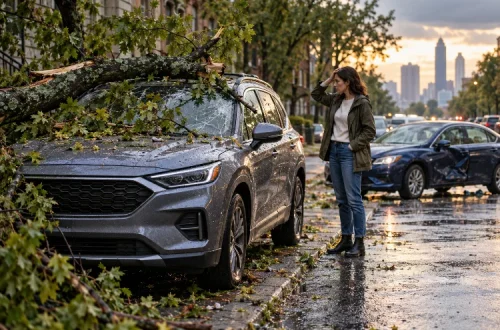
Imagine driving home after a long day when another vehicle suddenly crashes into yours. You’re shaken, your car is badly damaged, and you’re already thinking about repair costs.
But at least you have car insurance, right?
Unfortunately, having an active insurance policy doesn’t automatically mean every expense will be covered.
You might discover that your liability limits are too low, certain types of damage are excluded, or your policy doesn’t provide enough protection for the situation you’re facing.
That’s where things get expensive.
Understanding how coverage gaps create hidden financial risks for car owners is essential for anyone who wants to avoid unexpected bills and serious financial setbacks.
These gaps often remain invisible until an accident, theft, natural disaster, or insurance claim exposes them.
And sometimes, the consequences go far beyond paying for vehicle repairs.
Medical expenses, legal claims, outstanding car loans, and temporary transportation costs can quickly turn a manageable incident into a financial nightmare.
In this guide, we’ll explore common auto insurance coverage gaps, explain their potential financial consequences, and share practical strategies for protecting your vehicle and savings.
The discussion focuses on U.S. auto insurance, where requirements and policy terms vary by state.
1. What Are Auto Insurance Coverage Gaps?
Many drivers assume that buying an insurance policy means they’re financially protected against almost anything involving their vehicles.
In reality, every insurance contract contains coverage limits, conditions, exclusions, and specific responsibilities.
A coverage gap appears when your policy doesn’t fully protect you against a particular financial risk.
The Difference Between Having Insurance and Being Fully Protected
Let’s say you purchase the cheapest legal auto insurance available in your state.
Your policy includes basic liability protection, which helps pay for injuries or property damage you cause to other people.
However, your own vehicle might not be protected against collision damage, theft, or severe weather.
If someone steals your car and you don’t have applicable comprehensive coverage, you could face the entire financial loss yourself.
This is a straightforward example of an insurance protection gap.
According to the National Association of Insurance Commissioners (NAIC), different insurance types address different risks, and state laws don’t necessarily require every available protection.
The important lesson is that meeting legal insurance requirements doesn’t guarantee comprehensive financial security.
Coverage Gaps Aren’t Always Missing Policies
Sometimes, the problem isn’t the absence of coverage.
It’s the amount of protection provided.
For example, you might have bodily injury liability insurance but carry limits that are insufficient for a serious accident.
Your policy could pay its maximum applicable amount while leaving you responsible for additional damages.
Other gaps result from excluded activities, unlisted drivers, high deductibles, or insurance that expires unexpectedly.
That’s why reviewing your policy requires more than simply checking whether your monthly premium has been paid.
You need to understand exactly what circumstances your insurance covers and where your personal financial responsibility begins.
2. Insufficient Liability Coverage Can Threaten Your Finances
Liability insurance is one of the most important components of an auto insurance policy.
It generally helps cover qualifying injuries and property damage you cause to other people while driving.
However, low liability limits can expose car owners to substantial financial obligations.
Why State Minimum Coverage May Not Be Enough
Suppose you’re responsible for an accident involving an expensive SUV.
The vehicle damage totals $55,000, and your property damage liability limit is only $25,000.
Your insurer may pay up to the applicable $25,000 limit, leaving a potential $30,000 shortfall.
Depending on the circumstances and applicable law, the other party could pursue you for the remaining amount.
Now imagine an accident involving several injured passengers.
Emergency transportation, hospital treatment, rehabilitation, and lost income could create much larger claims.
Suddenly, the savings from choosing minimum liability limits seem insignificant compared with your potential financial exposure.
Understanding Split Liability Limits
Many American auto insurance policies express liability coverage through three numbers.
For example, a policy offering 100/300/100 typically provides:
- $100,000 in bodily injury liability coverage per person.
- $300,000 in bodily injury liability coverage per accident.
- $100,000 in property damage liability coverage per accident.
These limits are separate and subject to the policy’s terms.
They don’t mean an insurance company will automatically pay $500,000 for every accident.
Whether these limits are sufficient depends on your assets, income, driving exposure, and personal financial circumstances.
Drivers with significant assets may also want to investigate umbrella liability insurance, which can provide additional protection for qualifying claims.
The goal isn’t buying the highest available limits without thinking.
It’s choosing enough protection to reduce the chance that a serious accident threatens your financial stability.
3. Missing Collision and Comprehensive Coverage Creates Unexpected Costs
Your vehicle is probably one of your most valuable everyday possessions.
Yet many car owners underestimate how expensive it can be to repair or replace a damaged vehicle.
This becomes particularly important when insurance policies provide liability coverage but exclude damage to the insured driver’s car.
Collision Coverage Protects Against Crash-Related Damage
Imagine accidentally hitting a concrete barrier while parking.
Your vehicle suffers $6,500 in damage, but nobody else is involved.
Liability insurance generally won’t pay to repair your own car in this situation.
That’s where collision coverage becomes important.
Collision insurance helps pay for covered vehicle damage resulting from collisions with other cars or objects, subject to your deductible and policy terms.
Without it, the entire repair bill could become your responsibility.
For someone relying on their vehicle to commute to work, that expense could disrupt their budget and daily routine.
Comprehensive Coverage Addresses Different Threats
Not every major vehicle loss involves a traffic accident.
Flooding, hailstorms, falling trees, fires, theft, and vandalism can create expensive damage while your car is parked.
Comprehensive insurance generally addresses covered non-collision events.
For example, imagine parking outside during an unexpected storm.
A falling tree branch damages your vehicle’s roof and windshield, creating a $7,000 repair estimate.
If you only carry liability and collision insurance, this type of damage may remain uncovered.
Comprehensive protection could help, depending on the cause, exclusions, and deductible.
Should Older Vehicles Have Both Coverages?
Collision and comprehensive insurance aren’t equally valuable for every vehicle.
If your car is worth $3,500 and these coverages cost $750 annually, maintaining both may deserve closer evaluation.
However, dropping them means accepting the possibility of paying for an entire vehicle replacement yourself.
For drivers without substantial emergency savings, that financial risk may still be significant.
If your vehicle is financed or leased, your lender will also typically require physical damage protection.
The smartest approach is comparing your vehicle’s current value, annual premiums, deductibles, and ability to absorb a loss.
4. Uninsured Drivers and Medical Expenses Can Expose Hidden Risks
Here’s a frustrating scenario: you’re involved in an accident caused by another driver, but that person doesn’t have sufficient insurance.
You followed the rules, maintained your policy, and drove responsibly.
Nevertheless, you could still face financial uncertainty.
The Importance of Uninsured and Underinsured Motorist Coverage
Uninsured motorist coverage can help protect you when an at-fault driver lacks insurance.
Underinsured motorist protection addresses certain situations where the responsible driver’s insurance isn’t sufficient to cover eligible losses.
The exact benefits depend on state law and the policy.
Some coverages focus on bodily injuries, while uninsured motorist property damage may be available separately.
Imagine another driver causes an accident resulting in $80,000 in qualifying injury-related losses.
That driver only carries $25,000 in applicable bodily injury coverage.
Without suitable underinsured motorist protection, recovering the remaining expenses could become complicated.
Even if the other driver is legally responsible, collecting money from someone with limited assets may be difficult.
Medical Bills Can Become a Separate Financial Problem
Vehicle damage is only one part of an accident’s financial consequences.
Emergency medical treatment, physical therapy, prescription medication, and lost income can also create substantial expenses.
Depending on your state, personal injury protection (PIP) or medical payments coverage may help address eligible medical costs.
PIP may also cover certain lost wages and related expenses, depending on the policy.
However, benefit limits, exclusions, and coordination with health insurance vary.
Don’t assume that having health insurance automatically eliminates every potential financial risk associated with accident injuries.
You should understand your deductibles, out-of-pocket obligations, and available auto insurance medical benefits.
Otherwise, an unforseen accident could leave you managing several financial problems simultaneously.
5. Policy Exclusions Can Turn Ordinary Activities Into Expensive Mistakes
Insurance exclusions are among the most overlooked sources of financial exposure.
They describe circumstances in which an insurer may not provide coverage.
Unfortunately, many drivers don’t read these sections carefully until they’re preparing to file a claim.
Rideshare and Delivery Driving May Require Special Insurance
Imagine using your personal vehicle to deliver food on weekends.
You assume your existing auto insurance covers everything because you’re driving the same car you use for shopping and commuting.
But personal auto policies may exclude certain commercial activities.
According to the NAIC, rideshare drivers can experience insurance gaps during different stages of their work, particularly when they’re logged into an application but haven’t accepted a passenger.
Coverage may also vary when transporting passengers or completing deliveries.
Some transportation companies provide insurance for certain situations, but their protections, limits, and deductibles aren’t identical.
A driver may need a rideshare endorsement, delivery-related protection, or commercial auto insurance.
Before using your personal vehicle for income-generating activities, explain your plans to your insurer and confirm the appropriate coverage in writing.
Unlisted Drivers Can Create Complications
Another overlooked risk involves other people driving your vehicle.
For example, your teenage child might recently have received a driver’s license.
If they’re regularly operating your car but haven’t been properly disclosed to your insurer, you could encounter serious coverage complications.
Some policies and state regulations require household drivers to be listed or otherwise accounted for.
The consequences of failing to disclose them can vary, potentially affecting claims, premiums, cancellation, or renewal decisions.
Similarly, coverage when lending your car to a friend isn’t automatically identical under every policy.
Check the rules for permissive drivers, excluded drivers, and household members.
Vehicle Modifications and Personal Belongings
Expensive aftermarket upgrades can create another coverage problem.
Custom wheels, upgraded audio systems, and specialized equipment might have limited protection unless they’re properly declared or separately insured.
The same applies to personal property stored inside a vehicle.
Auto insurance doesn’t necessarily cover stolen laptops, electronics, or other belongings.
Certain losses might instead fall under homeowners or renters insurance, subject to deductibles and restrictions.
Understanding these distinctions helps prevent unpleasant surprises after theft or vehicle damage.
6. Auto Loans, Deductibles, and Policy Lapses Create Additional Exposure
Not every financial risk comes directly from an accident.
Sometimes, the structure of your insurance or vehicle financing creates unexpected obligations.
Three especially important areas involve loan balances, deductibles, and interrupted coverage.
When Your Car Loan Exceeds Your Vehicle’s Value
Suppose you owe $31,000 on your vehicle loan.
Unfortunately, your car is declared a total loss after a serious accident.
Your insurance company determines its actual cash value is $25,000.
Assuming that amount is payable, a $6,000 difference exists before considering deductibles and other adjustments.
Your insurer generally isn’t responsible for paying the entire loan balance simply because your car was totaled.
That difference can become a major financial burden.
Guaranteed Asset Protection, commonly called GAP insurance, may help cover some or all of the eligible shortfall.
The Consumer Financial Protection Bureau explains that GAP products are generally optional and can contain restrictions.
You should compare prices, exclusions, cancellation conditions, and benefits rather than assuming every GAP contract works the same way.
High Deductibles Can Cause Cash-Flow Problems
Increasing your deductible may lower your insurance premium.
But it also increases the amount you’re expected to pay when an applicable claim occurs.
For example, someone with a $2,000 collision deductible needs to be prepared to absorb that expense following covered damage.
If they have only $600 in emergency savings, even an insured accident could create financial stress.
Deductibles aren’t technically missing protection.
However, they represent an important portion of a loss that your insurance won’t pay.
The best deductible balances affordable premiums with an amount you can realistically handle.
An Insurance Lapse Can Be Especially Costly
Missing a premium payment or allowing your coverage to expire can create a seperate category of financial danger.
If an accident occurs while no applicable policy is in force, you may face uncovered losses and potential legal consequences.
A lapse can also affect future insurance pricing.
If you’re financing your vehicle, your lender may purchase force-placed insurance when required coverage is missing.
According to the CFPB, this insurance generally protects the lender’s interest rather than providing the same protection as your own auto policy.
And the cost may be passed on to you.
Always confirm that replacement coverage is effective before canceling an existing policy.
7. How to Identify and Eliminate Dangerous Auto Insurance Gaps
The good news is that many coverage problems can be discovered before an accident occurs.
You don’t need complicated financial software or advanced insurance knowledge.
You simply need to review your policy with the right questions in mind.
Start With Your Insurance Declarations Page
Your declarations page summarizes important details about your insurance contract.
It generally identifies the covered vehicles, listed drivers, policy dates, coverage types, deductibles, and applicable limits.
Start by checking whether this information accurately reflects your current circumstances.
Then examine the full policy wording and endorsements for exclusions, limitations, and special conditions.
Don’t hesitate to ask your insurance agent for clarification.
A useful question is: “What major expenses could I personally face after an accident that this policy wouldn’t cover?”
The answer may reveal risks you hadn’t previously considered.
Match Insurance Protection to Your Financial Situation
Your insurance requirements should reflect your actual exposure.
Someone driving a fully paid-off older vehicle may have different needs from a person financing a new SUV.
Similarly, a driver who works from home has a different risk profile from someone traveling long distances every day.
Consider the costs you could comfortably pay yourself and the expenses that would seriously damage your finances.
If replacing your car would consume your emergency savings, physical damage protection may deserve greater priority.
If you have substantial assets, higher liability limits may be worth exploring.
And if you drive for work, verify that your insurance covers those activities.
Compare Policies Without Creating New Gaps
Shopping around can help reduce premiums, but only when you compare equivalent protection.
Two policies with similar prices may include completely different liability limits, deductibles, and optional benefits.
For example, one insurer might offer a cheaper premium by excluding rental reimbursement or reducing uninsured motorist limits.
Those changes could make the apparent savings less attractive.
Ask every insurer to quote the same coverage levels before evaluating the differences.
You should also compare claims service, financial strength, and complaint information where available.
Sometimes paying slightly more for appropriate protection provides better value than choosing the absolute cheapest option.
Review Your Policy After Major Life Changes
An insurance review shouldn’t be a one-time activity.
Important changes such as moving, buying another car, adding a driver, changing jobs, or paying off a vehicle loan can affect your coverage needs.
Review your policy at least annually and whenever your circumstances change significantly.
Occassionally, reducing unnecessary add-ons will make sense.
In other situations, increasing a coverage limit or adding protection could prevent a much larger loss.
Keep copies of updated declarations pages, important endorsements, and written confirmations from your insurer.
If you ever need to file a claim, having accurate documentation can help you understand and support your request.
Most importantly, don’t wait until an accident happens to discover what protection you actually recieve.
Auto insurance is supposed to provide financial protection when unexpected events occur. Unfortunately, missing coverage, insufficient limits, exclusions, and policy lapses can leave car owners responsible for expenses they never anticipated.
The most effective way to reduce these risks is to understand your insurance contract and regularly evaluate whether it matches your financial circumstances.
Review your liability limits, collision and comprehensive protection, uninsured motorist benefits, deductibles, and any restrictions related to how you use your vehicle.
Remember, the cheapest insurance policy isn’t necessarily the safest financial decision.
Ready to protect your finances? Review your current policy today, identify potential coverage gaps, and contact your insurer to discuss suitable improvements.
A few thoughtful adjustments now could help you avoid thousands of dollars in unexpected expenses later.